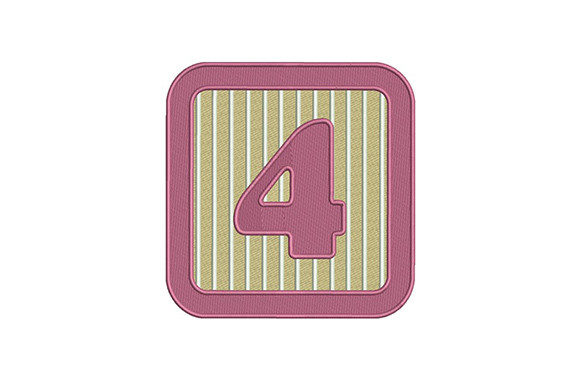
Number Four: A Back-to-School Embroidery That Delivers
First Impression: Cute, Clear, and Craft-Fair-Ready
As an embroidery designer who’s prepped over 200 craft fair booths—from downtown pop-ups to rural farmers’ markets—I opened Number Four expecting something simple. What I got was a confident, cheerful, and instantly legible machine embroidery design. It reads as “cute” without tipping into cutesy overload, “modern” without sacrificing warmth, and “back-to-school” without leaning on clichés like apples or pencils. There’s no clutter, no excessive flourishes—just clean lines, balanced proportions, and quiet personality. That’s gold when your booth has 30+ vendors and shoppers glance for under two seconds.
Where Number Four Shines on Real Craft Fair Products
Not all embroidery designs translate equally across surfaces. Here’s how Number Four performs where it counts:
- Tote bag design: Perfect centered on the front panel of a natural canvas or denim tote—it’s bold enough to read from six feet away but refined enough to avoid looking juvenile.
- Apron embroidery: Ideal above the pocket or on the bib. Its compact scale keeps focus on utility while adding handmade charm.
- Tea towel embroidery: Works beautifully in the corner or along the hem. The clean shape holds up against textured terry cloth and doesn’t drown in fabric texture.
- Embroidered patch: Highly effective as a sew-on or iron-on. Its simplicity means crisp edges even after laundering—and customers love collecting themed patches (think: “Number One,” “Number Two,” etc.).
- Caps and small pouches: Fits comfortably within standard 4x4 hoop size—no awkward cropping or scaling needed. Just hoop, stitch, and go.
- Pillow covers and market bags: Scales well up to 5x7 without losing definition. Looks intentional—not stretched or pixelated.
What Makes Number Four Sell on Etsy and at Handmade Markets
For the Etsy seller or boutique maker, Number Four checks three critical boxes: clarity, versatility, and emotional resonance. It’s immediately understandable—a number, not a riddle. Parents recognize it as back-to-school; teachers see it as classroom-ready; kids feel seen without being targeted. That subtle universality builds trust faster than slogans or cartoon characters.
Photographically, it’s a winner. On light fabric? Crisp contrast. On oatmeal linen or unbleached cotton? Warm and grounded. Even on dark fabric, a single thread color swap (e.g., creamy ecru instead of white) keeps it legible. And yes—it photographs cleanly for printable mockups, which saves hours when updating listings or social posts.
Production Practicalities: What You Need to Know Before Stitching
While Number Four is refreshingly straightforward, don’t skip these real-world checks before batch production:
- Test on scrap fabric first—especially if using textured tea towels or thick denim. Confirm that stitch density doesn’t pucker or sink.
- Check thread contrast carefully. Light thread on light fabric can vanish in person—even if it looks fine on screen.
- Review spacing and hooping ease. Does the design fit your most-used hoop without re-hooping mid-stitch? If you’re embroidering caps, confirm curvature compatibility—some numbers distort near the bill seam.
- Use the right stabilizer. For lightweight cottons, tear-away works. For knits or stretchy pouch fabrics, switch to cut-away or fusible.
- Create at least one real mockup—not just digital. Hold it beside your other bestsellers. Does Number Four hold its own visually? Does it complement your brand palette?
- Compare fabric colors side-by-side. A navy tote with ivory Number Four reads premium; the same combo on charcoal twill can mute the impact.
- Confirm commercial licensing before selling finished products. This is non-negotiable for commercial embroidery or digital embroidery file resale.
Design Notes You’ll Appreciate (From One Embroiderer to Another)
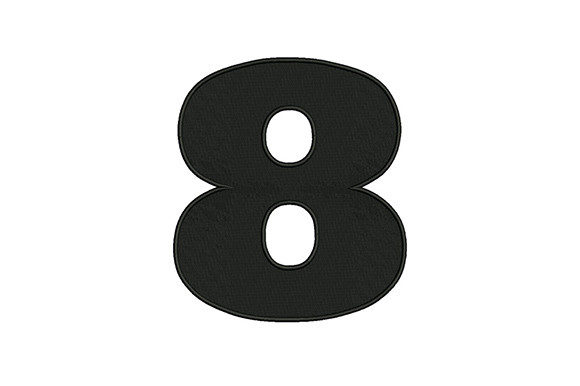
No tiny serifs. No nested curves. No overlapping letters. Number Four avoids common pitfalls that trip up small shop product consistency. Its open interior space prevents fill-stitch pooling on terrycloth. Its stroke weight stays readable down to 2.5 inches tall—meaning it works as both a focal point and a subtle accent (like on a pencil case zipper pull or notebook cover).
That said: avoid shrinking it below 2 inches unless you’ve tested thread tension and density. On dense fabrics like canvas or thick twill, ultra-small versions may lose crispness. Also, double-check how it behaves on curved cap surfaces—some digitizers compress vertical elements slightly to compensate for dome distortion. If your file doesn’t include that adjustment, plan a test run.
Why Number Four Strengthens Your Booth & Brand
In a sea of floral wreaths and quote-based embroidery, Number Four stands out by being quietly intentional. It doesn’t shout—it invites. Customers pause, smile, and say, “Oh! My kid’s in fourth grade.” That micro-moment of recognition is where sales begin.
It also supports brand consistency. Pair it with neutral linens, minimalist packaging, and cohesive typography—and suddenly your small shop product feels curated, not random. On display, it adds rhythm: group three sizes (small pouch, medium tote, large pillow) and watch how buyers instinctively reach for variety.
Most importantly, Number Four scales ethically. You can produce 50 embroidered tea towels in a weekend without sacrificing quality or hand-finished detail. That repeatability is rare—and invaluable—for craft fair sellers juggling orders, inventory, and energy.
Final Thought: A Design That Earns Its Place
Number Four isn’t flashy. It won’t trend on TikTok overnight. But it will sell steadily—from August through October, across totes, aprons, patches, and gifts. It respects your time, your fabric, and your customer’s eye. In the world of handmade product and back-to-school embroidery, that kind of quiet reliability is the highest compliment.