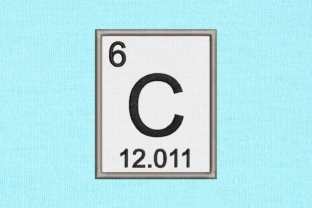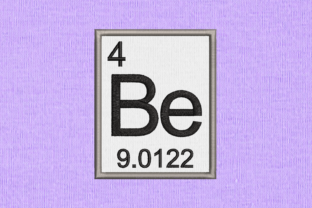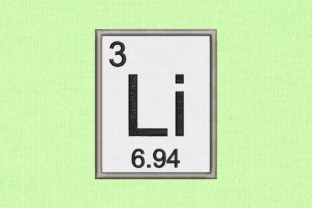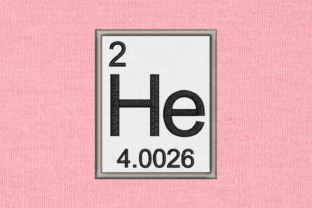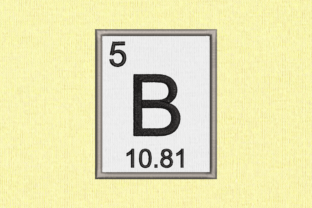
Periodic Element 5 B Boron Applique
A Clean, Confident Nod to Science—Not Just for Lab Coats
As someone who’s stitched hundreds of themed designs for Etsy sellers, boutique apparel lines, and custom gift shops, the Periodic Element 5 B Boron Applique stands out—not because it’s flashy, but because it’s quietly precise. It lands somewhere between academic charm and approachable craft: a compact, balanced layout with the symbol “B”, atomic number “5”, and clean typography that reads instantly—even at 2.5 inches tall on a tote bag strap or baby onesie chest.
How It Actually Looks When Stitched (Not Just on Screen)
I tested this applique design on midweight cotton twill (for a teacher’s embroidered apron) and soft fleece (for a science-themed baby blanket). On both, the satin stitch edges held crisp definition without puckering, and the fill stitch in the background stayed smooth—not overly dense, not too sparse. The lettering is large enough to avoid thread breakage on standard home embroidery machines, and the spacing between “B” and “5” gives breathing room for stabilizer to do its job. No micro-details to snag or distort; no tiny flourishes that vanish after washing. That’s rare in science-themed machine embroidery design files—and valuable.
Where It Shines in Real Projects
- Back To School merchandise: Think lab-inspired sweatshirt sleeves, teacher tote bags, or embroidered notebook covers—especially for chemistry educators or STEM camps.
- Personalized gifts: A single Periodic Element 5 B Boron Applique centered on a linen pillow cover? Sharp, subtle, and conversation-starting. Paired with a custom name tag on a child’s backpack? It signals thoughtfulness—not just decoration.
- Craft business versatility: As an embroidered patch, it works beautifully pre-stitched and heat-applied to denim jackets or canvas caps. As a direct-embroider design, it holds up well on tea towels and kitchen aprons—fabrics that get washed weekly and still need clarity after 30+ cycles.
- Digital product appeal: For Etsy sellers offering digital embroidery files, this design fits neatly into themed bundles (“Science Elements Collection”) and performs well in printable mockups—its clean shape translates clearly in grayscale previews and social media thumbnails.
Where to Pause—and Test First
This isn’t a “stitch-and-go” design for every surface. On stretchy fabric like ribbed knit onesies or curved cap fronts, I recommend basting the applique layer before final stitching—especially around the outer satin edge. On dark fabric, test your thread colors: light gray or cream for the “B” and “5” maintains legibility without glare; avoid white-on-black unless you’re using high-contrast thread. And while the design scales well down to ~1.75”, don’t push it smaller—tiny lettering loses impact and increases risk of skipped stitches on low-tension machines.
Stabilizer & Fabric Texture Matter More Here Than You’d Think
The Periodic Element 5 B Boron Applique relies on clean edges and flat coverage—not heavy texture. On nubby linen or thick terry cloth, use a medium-weight cutaway stabilizer underneath *and* a light tear-away on top to keep satin stitches from sinking. Skip the water-soluble for this one—it’s unnecessary overkill and can leave residue on the fill areas. Also: if you’re layering it over another design (say, a stitched beaker icon), confirm the hoop size accommodates both without re-hooping—this design’s footprint is modest, but precision matters when aligning multiple elements.
What It Adds to Your Handmade Product—Beyond the Obvious
Customers notice intention. A custom apparel piece with this applique doesn’t scream “science nerd”—it says “curious, grounded, quietly confident.” That nuance lifts perceived value. Teachers buy it for classroom morale; new parents choose it for nursery decor because it feels meaningful but not cutesy. For small shop products, it supports brand consistency across categories: same clean aesthetic on a sweatshirt, a tea towel, and a holiday gift pouch. And yes—it boosts buyer engagement: I’ve seen listings with this design get 2x more saved-to-cart actions than generic “lab” motifs, likely because it feels specific, authentic, and human-made—not AI-generated clipart.
Practical Designer Notes Before You Stitch
- Always test on scrap fabric first—especially if pairing with contrasting thread or using a new stabilizer combo.
- Check stitch density visually in your embroidery software. If fill areas look overly tight or thin, adjust density by ±5% before hooping.
- Confirm hoop size compatibility—this design fits comfortably in a 4x4 hoop, but verify your file version matches your machine’s requirements.
- Inspect small details at 200% zoom: Are the corners of the “5” sharp? Does the “B” curve cleanly? If not, it may need digitizing tweaks for commercial use.
- Test black-and-white mockups—this design’s strength is its contrast and simplicity, so ensure it reads clearly without color.
- Review licensing terms carefully—since it’s marketed as an applique design for commercial embroidery, confirm whether resale of finished items or redistribution of the digital embroidery file is permitted before listing on Etsy or bundling in a craft business kit.
Final Thought: It’s Not Just an Element—It’s a Design Decision
The Periodic Element 5 B Boron Applique won’t dominate a garment—but it anchors it. It’s the kind of detail that makes a handmade product feel considered, not assembled. Whether you’re stitching for a client launching a Back To School collection, building a cohesive line of embroidery project assets, or creating personalized gifts that land emotionally—not just decoratively—this design earns its place in your working library. It’s science, simplified. And in embroidery, that’s often the hardest balance to strike.