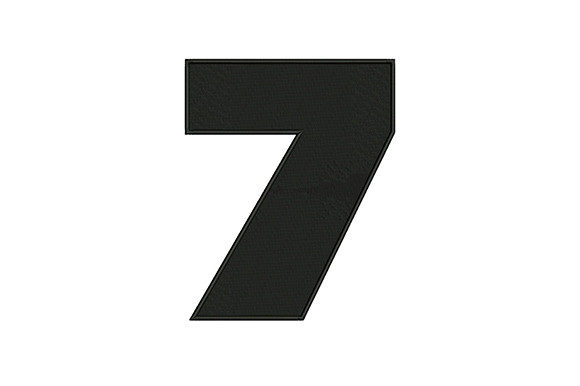
Bold Number 7: A Craft Fair-Ready Embroidery Design
First Impression: Clean, Confident, and Classically Back-to-School
As an embroidery designer who’s prepped over 200 craft fair booths—and watched real customers pause, point, and reach for items mid-aisle—I can tell you Bold Number 7 lands exactly where it should: with quiet confidence. It’s not cutesy or cartoonish. It’s not distressed or vintage-filtered. It’s bold in the best handmade sense—structured, legible, and grounded in blackwork tradition. That means it reads instantly as intentional, skilled, and premium—even at three feet away. For Back To School season, that’s gold. Parents shopping for teacher gifts, students personalizing gear, or educators curating classroom supplies all respond to clarity and craftsmanship. Bold Number 7 delivers both.
Where It Shines on Craft Fair Products
This machine embroidery design thrives where simplicity meets impact. On a natural canvas tote bag? Perfect center-chest placement reads like a signature—not a sticker. On a linen apron? It anchors the pocket area with subtle authority. For tea towel embroidery, it works beautifully folded into a corner or centered above a hemline—especially on textured cotton or waffle-weave towels, where blackwork’s clean lines hold their shape without bleeding into the fabric texture.
As an embroidered patch, Bold Number 7 gains versatility: iron-on or sew-on, it upgrades denim jackets, backpacks, and market bags without competing with busy prints. On structured caps, keep it small (under 3 inches wide) and place it on the front panel—its strong vertical stroke and balanced weight prevent distortion on curved surfaces. For small pouches and pillow covers, it scales down gracefully *if* your digitizing preserves stitch integrity at reduced sizes. Avoid pushing it below 1.75 inches unless you’ve tested thread tension and density thoroughly.
Selling Smarter: Visual Clarity & Booth Impact
In a crowded craft fair aisle, Bold Number 7 earns attention by being instantly legible—not clever, not cryptic, just unmistakably *seven*. That matters more than whimsy when shoppers are scanning dozens of booths in under two minutes. It photographs cleanly for Etsy listings and social previews: no tiny flourishes to blur, no gradient fills to misrender, no overlapping elements that confuse auto-cropping tools. Pair it with neutral or muted fabric colors (oatmeal, charcoal, navy, olive), and it reads as elevated—not generic.
For booth display, I always create at least one real mockup before ordering bulk fabric. With Bold Number 7, I used it on a heavyweight cotton tote, a stonewashed denim cap, and a set of three tea towels in tonal indigo shades. The result? Consistent brand voice across product types—no jarring style shifts. Customers commented on how “put-together” the table felt, even though each item was distinct. That cohesion is rare—and it lifts perceived value across your entire handmade product line.
Production Reality Check: What Works (and What Needs Caution)
Bold Number 7 is built for batch production—but only if you respect its structure. As a blackwork embroidery, it relies on consistent stitch density and precise spacing. Dense fill areas (like the horizontal bar of the 7) can pucker on lightweight knits or stretchy fabrics unless stabilized properly. Always pair it with medium-weight cutaway or tear-away stabilizer—especially on textured towels or thick twill caps.
On dark fabric, stick with high-contrast thread—matte black or deep charcoal works best; avoid shiny threads that reflect light unevenly. And never skip the scrap test: run Bold Number 7 on your exact fabric + stabilizer + needle combo before cutting yardage. Thread color shifts subtly between monitor and reality—what looks crisp on screen may vanish on charcoal linen without a white underlay.
Also note: while the description says it stitches out nicely on “a variety of fabrics,” that doesn’t mean *all* fabrics. Avoid highly napped fleece, ultra-slippery satin, or loosely woven burlap without significant digitizing adjustments. If you’re selling finished products commercially, confirm your digital embroidery file license permits resale of physical goods—this isn’t implied by “back-to-school use.”
Why It Converts for Creative Entrepreneurs
Etsy sellers and small shop owners love Bold Number 7 because it bridges niches: it’s school-themed but not childish, minimalist but not cold, traditional but not dated. It fits seamlessly into a curated collection alongside monogrammed napkins, botanical tea towels, or teacher appreciation bundles. Buyers don’t need to “get” it—they recognize quality, intention, and wearability immediately.
For digital sellers offering embroidery files, this design pairs beautifully with printable mockups. Create lifestyle shots showing it on a student’s backpack, a teacher’s tote, and a dorm-room pillow cover—then bundle it with coordinating fonts or layout guides. For Cricut crafters adding heat-transfer vinyl accents, use Bold Number 7 as a visual anchor to inspire hybrid projects (e.g., embroidered base + vinyl date stamp).
Final Designer Notes Before You Stitch
- Test Bold Number 7 on your target fabric *before* cutting or hooping production runs.
- Check thread contrast against final fabric swatches—not just your monitor.
- Review spacing between elements: tight kerning is intentional, but verify it doesn’t collapse at smaller sizes.
- Confirm hoop size compatibility with your machine and intended product (e.g., cap frames vs. standard hoops).
- Inspect stitch density in the thickest section—the horizontal stroke—to avoid puckering or thread breakage.
- Use appropriate stabilizer: cutaway for stretchy or unstable fabrics; tear-away for stable wovens.
- Create at least one finished product mockup—preferably photographed in natural light—to evaluate true visual impact.
- Compare how Bold Number 7 reads across multiple fabric colors: light, medium, and dark.
- Verify commercial licensing terms—especially if selling embroidered patches, apparel, or kits.
Bottom line? Bold Number 7 isn’t just another number—it’s a smart, scalable, shelf-ready asset for any embroidery business building real-world appeal. It respects the craft, serves the customer, and strengthens your booth, your listings, and your reputation—one clean, confident stitch at a time.